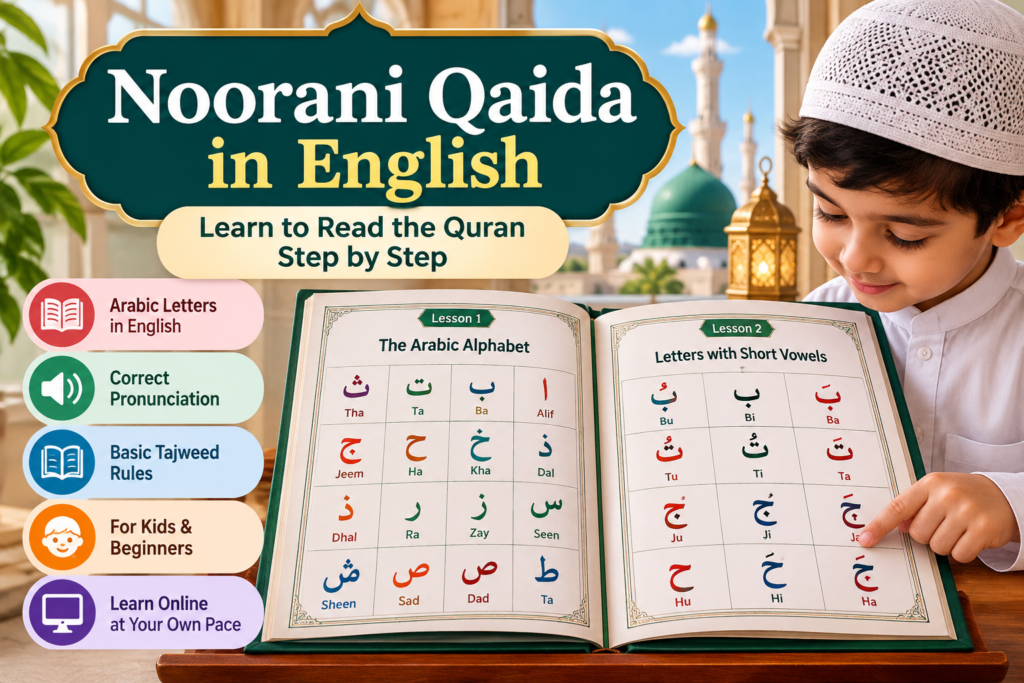
Learn Noorani Qaida in English – A Beginner's Guide
Learning to read the Holy Quran begins with understanding Arabic letters and their correct pronunciation. Noorani Qaida in English is a helpful starting point for children and beginners who want to build their Quran reading skills step by step.
With beginner-friendly explanations, learners can study Arabic letters, recognize their sounds, and gradually understand the foundations of Quran reading. These Noorani Qaida lessons in English can help learners understand the basics before moving on to more advanced reading practice.
What Can You Learn from Noorani Qaida?
Noorani Qaida for Kids and Adults
Noorani Qaida for beginners can be useful for both children and adults who are starting their Quran reading journey. Regular practice helps learners become more familiar with Arabic letters, basic vowel sounds, and common reading patterns.
Learn Noorani Qaida Online
If you prefer guided learning, learn Noorani Qaida online with a teacher who can help you practice pronunciation and understand lessons at your own pace. Consistent practice and feedback can support progress toward reading the Quran more confidently.
Start with the basics, practice regularly, and continue learning step by step. Use the Noorani Qaida material available on this page to support your learning.
View Noorani Qaida MaterialWhy Is Noorani Qaida Important for Quran Reading?
Noorani Qaida is a beginner-friendly learning resource for people who want to understand Arabic letters and develop their Quran reading skills. It introduces learners to the Arabic alphabet, vowel sounds, letter combinations, and basic pronunciation. Studying Noorani Qaida in English can be helpful for learners who understand English better than Arabic and need simple explanations while beginning their learning journey.
1. Learn Arabic Letters and Their Sounds
Recognizing Arabic letters is one of the first steps in learning to read the Quran. Beginners can practice identifying each letter and learning how its sound may change depending on its position and the marks placed above or below it. Regular revision helps learners become more familiar with Arabic script and prepares them for joining letters into words.
2. Understand Basic Vowel Signs
Short vowel signs, commonly known as Harakat, play an important role in Arabic pronunciation. Beginners gradually learn how Fatha, Kasra, and Damma affect the sounds of letters. Further lessons introduce Sukoon, Tanween, and other reading signs. Learning these concepts step by step can make Quran reading practice easier to follow.
3. Build a Foundation in Tajweed
Noorani Qaida lessons often introduce basic pronunciation principles that support correct Quran recitation. Tajweed is the set of rules used to recite the Quran correctly. Learners can begin by paying attention to letter sounds and practicing carefully. A qualified Quran teacher can explain difficult pronunciations, correct mistakes, and guide students as they progress to more advanced Tajweed rules.
4. Noorani Qaida for Kids and Adults
Children and adults can both benefit from a structured introduction to Arabic reading. Parents can help children establish a regular practice routine, while adult beginners can study at a pace that suits their existing knowledge. Short, consistent study sessions and regular revision are often more manageable than trying to learn too many new concepts at once.
5. How to Learn Noorani Qaida Step by Step
Start by recognizing Arabic letters and their sounds. Next, practice the vowel signs and simple combinations before moving to longer examples. Review previous lessons regularly and read each example carefully. Avoid rushing through a lesson if the pronunciation is still unclear. If possible, ask a knowledgeable teacher to listen to your recitation and provide feedback.
6. Learn Noorani Qaida Online
Online Quran learning can provide flexibility for families with busy schedules. Learners may use digital lessons or a Noorani Qaida PDF for revision and arrange online instruction when they need personal guidance. When choosing an online Quran class, consider the teacher's experience, the lesson structure, available timings, and whether the teaching approach suits the learner's age and level.
How Can You Make Steady Progress?
Set aside a regular time for practice and revise earlier lessons before beginning new ones. Read slowly, focus on pronunciation, and repeat examples that are difficult. Parents can support younger learners by encouraging a calm routine and celebrating progress without creating unnecessary pressure. Remember that learners progress at different rates, so understanding each lesson is more important than finishing the book quickly.
Frequently Asked Questions
Can beginners learn Noorani Qaida in English?
Yes. English explanations can help beginners understand the purpose of lessons, although listening to correct Arabic pronunciation and practicing it are also important.
Is Noorani Qaida suitable for children?
It is commonly used as an introductory resource for children learning Arabic letters and Quran reading. The pace and teaching method should suit the child's age and ability.
Can I use a Noorani Qaida PDF for practice?
Yes, if the PDF is clear and suitable for your learning level. You can review lessons on your device or print them where permitted. A teacher can help you check pronunciation that may be difficult to learn from written material alone.
Should I learn Tajweed with Noorani Qaida?
Learning basic pronunciation alongside beginner reading lessons can provide a useful foundation. More detailed Tajweed study may require additional lessons and guidance from a qualified teacher.
Use Noorani Qaida in English as a structured starting point, practice regularly, and seek guidance when you need help with pronunciation. A steady learning routine can help you build confidence as you progress toward reading the Quran.
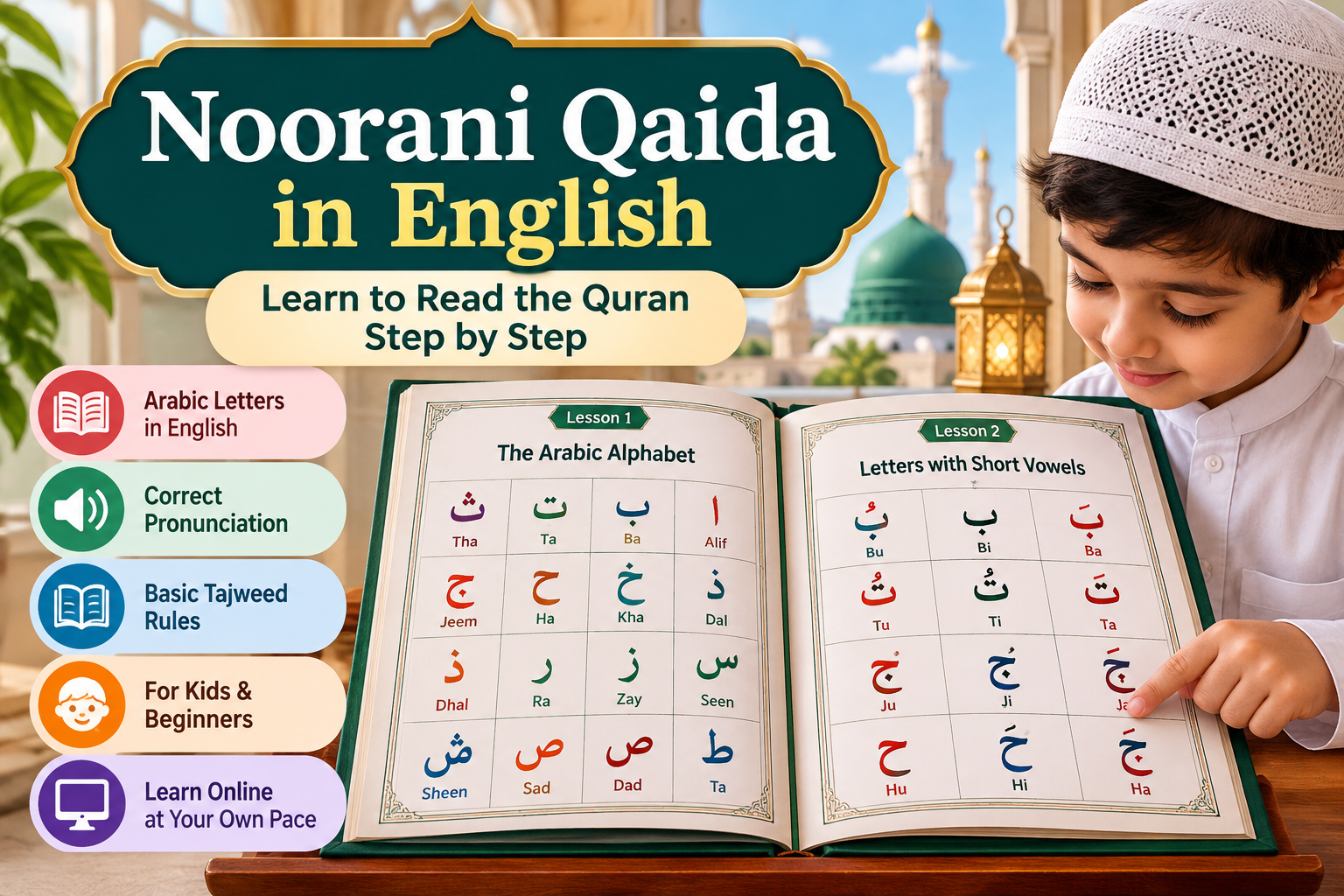
Noorani Qaida in English – Learn Step by Step
Noorani Qaida in English is a helpful starting point for children and adults who want to learn Arabic letters and improve their Quran reading skills. Clear explanations and regular practice can help beginners understand the basics of Arabic pronunciation before progressing to longer words and Quranic verses.
This learning guide introduces important concepts for beginners, including Arabic letter recognition, vowel signs, pronunciation, and basic Tajweed principles. Learners can study at a comfortable pace and revise lessons as needed.
What Can You Learn from Noorani Qaida?
Noorani Qaida for Kids and Adults
Noorani Qaida for beginners can support learners at different stages of life. Parents can help children practise regularly, while adult learners can revise each lesson at their own pace. Short, consistent practice sessions can make learning easier to manage over time.
Learn Noorani Qaida Online
Online learning can offer flexibility for families with busy schedules. Learners may use suitable digital materials for revision and seek guidance from a qualified Quran teacher when they need help with pronunciation or reading rules.
How to Practise Effectively
Begin with Arabic letter recognition, then practise vowel signs and letter combinations. Revise earlier lessons before moving ahead, read slowly, and ask a knowledgeable teacher for feedback whenever a pronunciation is difficult. Consistent practice is more useful than rushing through lessons.
Use Noorani Qaida as a structured introduction to Arabic reading. Practise regularly, review the basics, and continue learning step by step.